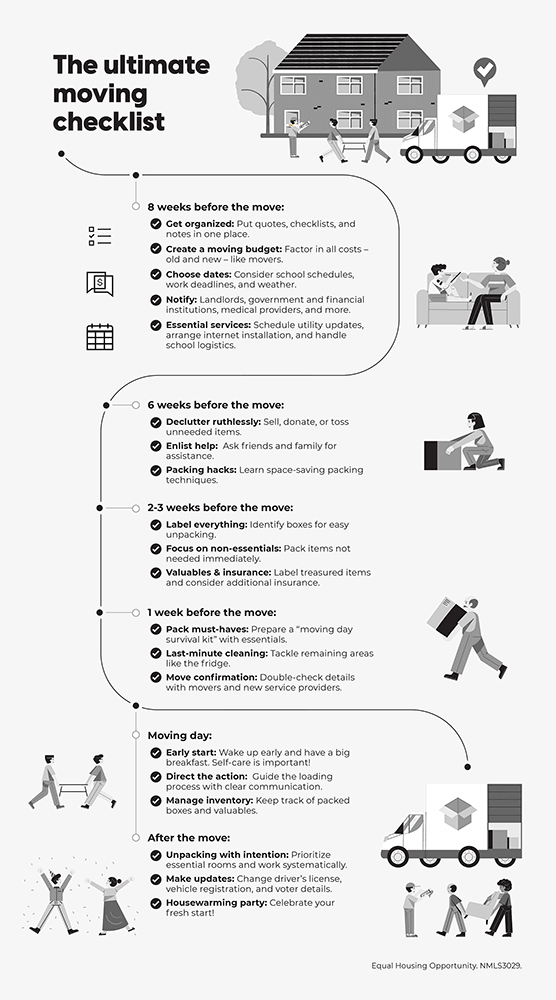
8 weeks before the move: Your first steps
-
Simply put, moving day success boils down to one word: Organization. Your first step is to create a “moving binder” to house your important documents. This is where you can store your quotes, checklists, contact information, receipts, and notes for easy reference. Include copies of birth certificates, medical records, and insurance policies for safekeeping.
-
Are you planning to take on the task of moving by yourself with a moving truck rental, or are you looking to hire a professional moving company? Understanding your resources will help you create the perfect moving plan, whether it’s a local move or a long distance move.
-
Getting your budget set weeks in advance will avoid stress down the road. Be sure to factor in moving costs, packing materials, new housing expenses, potential travel arrangements, and any move out cleaning services you might need. Setting a moving budget helps you save money and plan accordingly.
-
If you’ve decided to work with a professional moving company, now is the time to find the right partner. Use your budget as a guideline for the types of services you can afford. Get estimates from at least three reputable moving companies and research reviews, recommendations, licensing, and insurance. Ask about other services like junk removal company options or car shipping if needed.
-
Time to get your notifications ready. Notify landlords, banks, utility companies, employer and payroll department, doctors, schools, local post office, subscriptions, friends, and family so there are no surprises during the move. Update your address with the local voter’s registration office as well.
-
Schedule utility transfers, internet installation, move in cleaning company services, parking permits, and school transcript transfers to your new school district. Arrange for temporary storage if your new space isn’t ready by your move in date.
-
Measure doorways, staircases, and spaces in your new home to avoid furniture problems. Knowing how many floors you need to move items up or down helps when hiring movers. Order boxes, wardrobe boxes, bubble wrap, and other packing supplies to start packing.
6 weeks before the move: Start decluttering
-
Purge items you no longer need. Less stuff means less to move and less stress. Sort belongings into keep, sell, donate, or toss categories. Consider a garage sale and donation trips to local stores or charities. Use up perishable items and cleaning supplies to avoid moving unnecessary goods.
-
Ask friends and family to help sort, sell, donate, or watch kids and pets while you pack. Hiring professional movers can save time and reduce physical strain.
-
Use online resources to learn efficient packing strategies. Create a detailed packing schedule and list for each box. Use different packing materials to protect fragile items, especially when packing kitchen dishes or electronics. Prepare clothes, including summer clothes or off-season items, for packing.
-
Build a digital inventory of your belongings and assign rooms in your new home. Label boxes with contents and destination rooms to save time during the unpacking process.
-
Use up pantry and freezer food to reduce what you need to move. This helps avoid food waste and lightens your load.
-
Take photos of electronic setups, furniture, or equipment before taking them apart so you can reassemble them later. Photograph complex tech setups and smart home devices.
2-3 weeks before the move: Put the pack in packing
-
Label boxes clearly and connect labels to your inventory list for easy unpacking. Use color-coded labels or numbers to organize.
-
Start with seasonal or rarely used items and work toward everyday essentials. Use wardrobe boxes for clothes and specialty containers for fragile items.
-
Separate valuables and decide whether to insure them or keep them with you. Declare high-value items to your moving company and ask about full value protection.
-
Disassemble large furniture early to avoid delays on moving day. Keep screws and small parts in labeled bags.
-
Schedule your final rental walkthrough or virtual walk through and attend it if possible. Document the condition of your current home to ensure return of your security deposit.
1 week before the move: The finishing touches
-
Prepare a moving-day survival kit with toiletries, medications, clothes, chargers, important documents, snacks, and basic kitchen items like toilet paper and utensils.
-
Clean out drawers, closets, and cabinets, or hire move out cleaning services if needed. Arrange for lawn care equipment to be stored or moved.
-
Defrost and clean your refrigerator and freezer at least 24 hours before the move.
-
Confirm dates, times, fees, and services with movers and any helpers. Verify the moving truck company and USDOT number. Prepare cash for tipping movers.
Moving day checklist: final tasks before the truck arrives
-
Wake up early and eat a good breakfast. Moving takes energy.
-
Guide movers or helpers and communicate clearly to keep things efficient. Answer basic questions they may have about your belongings and new space.
-
Track boxes and valuables as they are loaded and unloaded. Use your inventory list to place boxes in the correct rooms.
-
Do a final walk through of your old home to ensure nothing is left behind. Check closets, cabinets, appliances, and outdoor spaces.
-
Review and sign the bill of lading, the legal contract between you and the mover. Keep a copy for your records.
-
If renting, confirm the process for your security deposit return with your landlord.
After arriving at your new home
-
Check that utilities, internet, and other services are set up and working.
-
Ensure movers place boxes and furniture in the correct rooms.
-
Change the locks on your new home for security.
-
Do a final walk through of your old home to ensure nothing is left behind. Check closets, cabinets, appliances, and outdoor spaces.
-
Visit the local post office or use their website to update your address officially.
-
Visit the DMV to register your car and update your car insurance as needed.
-
Establish relationships with local stores and service providers, including veterinarians for pets.
Final thoughts
Following this comprehensive moving checklist will help save time, reduce stress, and ensure a smooth transition to your new home. Talk to a professional moving company or your loan officer to explore your options and get ready for your move.